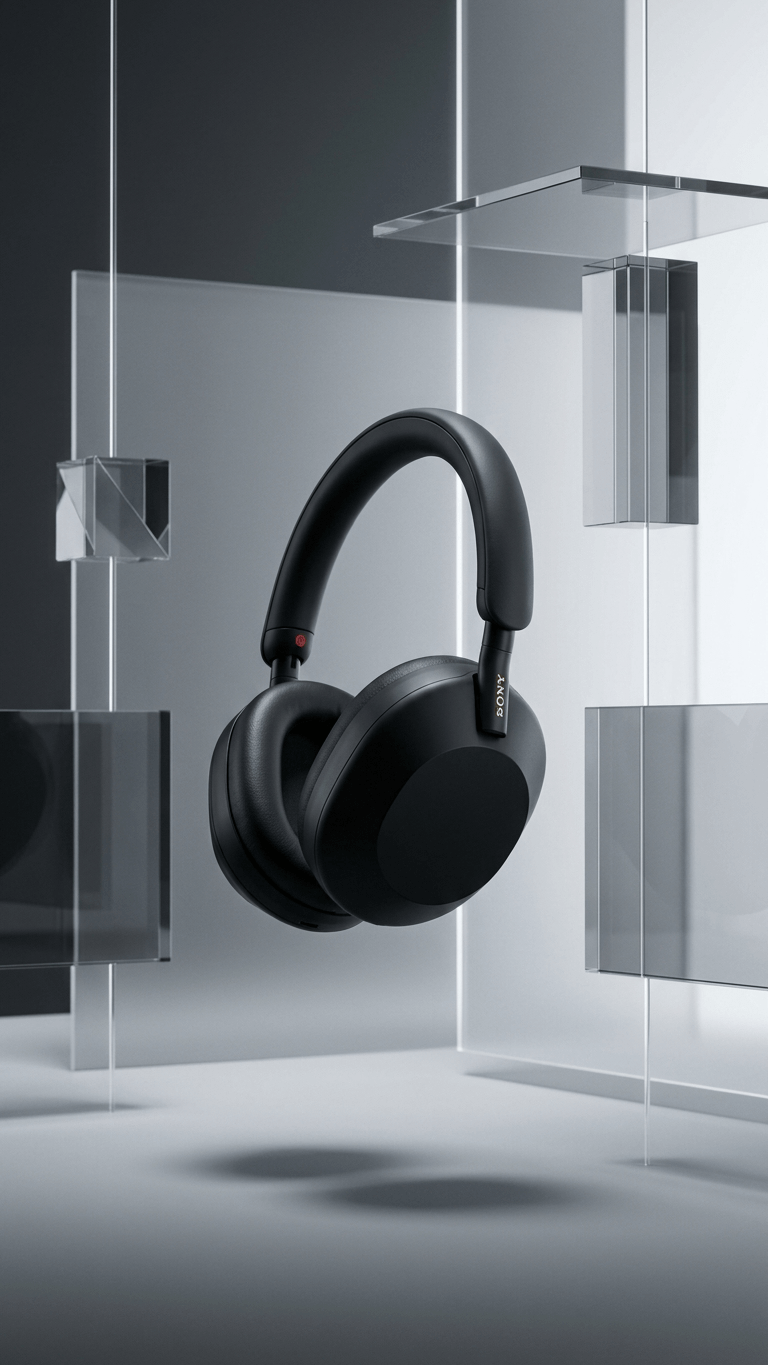
Is This a Known Problem, or Bad Luck?
This is one of the more heavily documented hardware complaints in recent headphone history, so it's worth establishing the scale before deciding what to do.
Independent survey data
SoundGuys polled Sony WH-1000XM5 owners and found that 47% reported some form of hardware failure, with 24%, or roughly one in four respondents, specifically citing a broken hinge. A separate SoundGuys poll of over 2,200 respondents found a similar pattern: 25% said their hinge had broken outright, and another 12% reported multiple issues that included hinge failure. A third SoundGuys poll of 1,833 respondents again landed on a 24% hinge failure rate. Three separate polls converging on roughly the same number is a meaningful pattern, though it's worth noting these are self-selected online polls rather than a controlled study, so the true population-wide failure rate could differ.
Owner reports across platforms
Reddit's r/sonyheadphones community and the Slickdeals deal-discussion threads for the XM5 consistently surface the same failure description: the plastic swivel point where the earcup meets the headband develops a hairline crack that spreads until the earcup separates or hangs by its internal wire. One recurring comment across Slickdeals threads describes the community tracking new hinge-failure posts appearing roughly every 14 hours, though this is an informal, unverified estimate from forum members rather than a documented count.
Legal record
In November 2025, plaintiff Ian Kanter filed a federal class action against Sony Corporation of America and Sony Electronics Inc. in the US District Court for the Southern District of New York (Kanter et al. v. Sony Corporation of America, Case No. 1:25-cv-09691). The complaint alleges that the WH-1000XM5's swiveling hinge mechanism is defectively designed, that normal folding, carrying, and wearing places stress on a "poorly secured" plastic mounting point, and that Sony has denied warranty claims by labeling the resulting cracks as accidental damage rather than a manufacturing defect. According to the complaint, Kanter's own pair failed at the hinge roughly three years after a November 2022 purchase. In April 2026, a federal judge granted Sony's motion to compel arbitration and stayed the litigation, meaning no class has been certified and the case will not produce a class-wide settlement. Sony has not issued a detailed public response to the specific allegations, and its standard position with individual customers, per the complaint and multiple owner accounts, has been to treat the break as physical damage rather than a defect.
Why the Hinge Breaks: The Design Issue
According to reporting from Notebookcheck and SoundGuys that references teardown analysis, the WH-1000XM5's earcup-to-headband connection point is built primarily from plastic, without a metal reinforcement at the lower section of the hinge assembly. That plastic mounting point is the same spot that absorbs stress every time the earcups swivel to sit flat around your neck, fold slightly during storage, or get adjusted while worn.
Owner accounts and the class action complaint describe a consistent failure progression:
- A small amount of looseness or wobble develops at the swivel point.
- A hairline crack appears in the plastic, often invisible unless you look closely.
- The crack widens with continued use until the earcup partially or fully separates from the headband arm, usually still connected by the internal audio wire.
This differs from a one-time impact fracture. Multiple owners report the break happening during ordinary handling, such as taking the headphones off or adjusting the fit, rather than from a drop.
Sony's response with the redesigned WH-1000XM6
Sony's newer flagship model reportedly uses a metal component in the hinge to address this exact criticism, according to Notebookcheck's coverage of a teardown by iFixit. However, that same reporting notes that the lower part of the XM6's hinge assembly, near the Sony logo, is still plastic without metal reinforcement, and at least one early XM6 owner has already reported a broken hinge through the same failure mode. A separate SoundGuys report on the XM6 describes a different mechanical issue: a threaded metal fastener that can work loose if not torqued precisely during assembly, which the outlet says has produced hinge-adjacent failures "sometimes within weeks of purchase." SoundGuys also reports that Sony has denied some of these newer warranty claims using the same "physical damage" classification used with the XM5. This context matters if you're deciding whether to repair your XM5 or replace it with the newer model — the redesign appears to be an improvement, but it has not fully eliminated hinge-related failures according to early reports.
How to Tell If You Have the Same Issue
Before assuming the worst, check for these specific signs, which match the failure pattern described across independent reports and owner accounts:
- Looseness at the swivel point. The earcup rotates with less resistance than it used to, or wobbles slightly when you move your head.
- A visible seam or hairline crack in the plastic housing right where the earcup connects to the headband arm, often near the Sony logo area.
- Uneven earcup position. One earcup sits lower, tilts oddly, or no longer holds a consistent angle against your ear.
- The earcup separating partially or fully from the headband, typically still attached by the thin internal wire.
- Fit degradation without an obvious cause. If you haven't dropped or bent the headphones but notice the fit has become unstable, the internal plastic is likely the cause rather than something external.
If you see any of these, the hinge issue is likely underway even if the earcup hasn't fully detached yet. Catching it at the "looseness" or "hairline crack" stage gives you more repair options, including some of the reinforcement kits discussed below, than waiting until the earcup fully separates.
What to Do Immediately
- Stop flexing the damaged side. Continuing to fold, rotate, or wear headphones with a visible crack accelerates the failure and increases the risk of damaging the internal wiring, which raises the eventual repair cost.
- Document the damage. Take clear photos of the crack or separation from multiple angles, along with your purchase receipt or order confirmation. This matters whether you're filing a warranty claim, a store return, or a credit card purchase-protection claim.
- Check your warranty window. Sony's standard US warranty on the WH-1000XM5 is one year from the original purchase date. If you bought through Amazon, Best Buy, or a similar retailer with a longer store-specific warranty or protection plan, check those terms too — though see the note below on extended warranties.
- Note how you're using the headphones. If you plan to file a warranty claim, be prepared to describe your usage honestly. Owner reports and the class action complaint suggest Sony's support team frequently attributes hinge cracks to "accidental damage" even in cases with no reported drop or impact, so a clear, factual description of normal use may help your case, though it does not guarantee approval.
Warranty Claims: What to Expect
If your headphones are still within the one-year warranty period, contacting Sony support directly is the logical first step, since a covered repair or replacement would cost you nothing. That said, set realistic expectations based on the available evidence:
- Manufacturer claim: Sony's published warranty covers defects in materials and workmanship but excludes damage caused by misuse or accidents. This is a standard warranty structure across the industry.
- Independent and legal evidence: According to the class action complaint and numerous individual owner reports collected by outlets including TechTimes and consumer forums, Sony support has a pattern of classifying hinge cracks as accidental physical damage, which falls outside warranty coverage, rather than treating them as a manufacturing defect. One reviewer on a retailer site described paying for an extended warranty specifically to cover this scenario, only to be told the hinge separation was not covered.
- Extended and third-party warranties: Per consumer forum reports, some add-on protection plans specifically exclude hinge-related claims on the XM5, so purchasing a third-party protection plan is not a reliable safeguard against this particular failure. Confirm the exact exclusions in writing before relying on one.
Repair Options and Costs
If your headphones are out of warranty, or Sony has denied the claim, you have several realistic paths. None of these should be treated as a guaranteed fix, since none of them address the underlying design weakness — they replace or reinforce the same type of part that failed originally.
| Option | Reported Cost | What You Get | Trade-off |
|---|---|---|---|
| Sony official repair | Roughly $150–$370 | OEM parts, factory-level repair | Highest cost; may approach or exceed the price of a new unit at current sale prices |
| Third-party OEM-style hinge part (self-install) | Roughly $25–$40 per side | Direct swivel-hinge replacement part | Requires disassembling the headphones; involves handling small wires and screws |
| DIY reinforcement kit | Roughly $30–$40 | Aftermarket part designed to reinforce or replace the weak plastic point, sometimes advertised with a lifetime warranty by the seller | Third-party manufacturing quality varies by seller; installing after a full break can be more involved than installing preventively |
| Professional third-party repair service | Varies by provider | Parts and labor handled for you | Adds cost over a DIY kit; turnaround time depends on the shop |
| Local "glue" fix | Low cost | Temporary hold | Multiple owner reports describe glued repairs failing again within weeks to months; not a durable fix |
Should You Repair, Replace, or Upgrade?
This depends on three factors: how much you paid, how satisfied you are with the sound and ANC performance otherwise, and how much risk tolerance you have for a repeat failure.
Repair makes sense if:
- You're otherwise happy with the XM5's sound quality and noise cancellation.
- You're comfortable with a modest DIY repair, or willing to pay a repair shop a reasonable rate.
- The rest of the unit (battery, drivers, buttons, ANC) is functioning normally.
Replacing with a new XM5 makes sense if:
- You can find one at a steep discount that makes a new unit cheaper than a repair, and you're willing to accept the same failure risk going forward (ideally paired with one of the prevention steps below).
Upgrading to the WH-1000XM6 is worth considering if:
- You want Sony's redesigned hinge, which independent reporting describes as a genuine structural change from the XM5's design, even though early reports show the newer hinge is not entirely failure-free.
- You value the reported improvements in ANC performance (independent testing places the XM6's noise reduction at roughly 87% versus roughly 84% for the XM5) and additional battery life.
- The price gap between a discounted XM5 and the XM6 has narrowed enough that the difference feels justified for the redesigned hinge and other upgrades.
How to Reduce the Risk of a Repeat Failure
If you repair or replace your XM5, or if your hinge hasn't failed yet, these steps are drawn from repair-kit sellers, iFixit contributors, and recurring owner advice, and are aimed at reducing (not eliminating) stress on the plastic mounting point:
- Use a rigid case that supports the headband arch, rather than one that cradles the headphones with the earcups already swiveled inward, since that resting position places ongoing lateral pressure on the hinge.
- Avoid folding or swiveling the earcups further than necessary when putting the headphones on, taking them off, or packing them away.
- Use two hands when adjusting the headband or earcup angle instead of one-handed twisting, which concentrates torque on a single hinge point.
- Consider a preventive reinforcement kit if your headphones are still intact but you're concerned about the well-documented failure pattern, particularly if you plan to keep the headphones for several years.
- Photograph your headphones' condition at purchase, including the hinge area, so you have a clear before-and-after reference if you ever need to dispute a warranty denial.
None of these steps change the underlying plastic construction, so they reduce risk rather than remove it.